
Amateur radio
Radio amateur hobbyists are limited to the use of small frequency bands known as amateur radio bands, which are allocated throughout the radio spectrum. Within these bands, the hobbyists are permitted to transmit on any frequency.
People engage in amateur radio for a variety of reasons, such as social chatting, information sharing, technical experimentation, self-training, radiosport, contesting, and to help out in emergency situations. An individual operator can make contact with another individual, or participate in round table meetings known as “rag chew sessions”. Regularly scheduled on-air meetings for amateur radio operators are known as “nets”, and the moderating station is called the “net control”.
During major emergencies, such as natural disasters or terrorism events, amateur radio operators can help by enabling communication when the normal infrastructure for two-way communication is damaged or overloaded (phone networks, internet, etc). Many amateur operators own battery-powered or generator-powered equipment that will work even when the electrical grid is down. Special “nets” are available for operators who wish to learn procedures for emergencies.
The Evolution of Amateur Radio: 1900 to the Present
From spark-gap transmitters and shortwave pioneering to space communications and digital DSP modes
The Spark-Gap Era & Regulation (1900–1920)
Early 1900s
The Dawn of “Ham” Operators & Spark-Gap Transmitters
Origins
Following Guglielmo Marconi’s trans-Atlantic experiments, amateur experimenters construct homemade spark-gap transmitters, Leyden jar capacitors, and coherer receivers. Commercial and maritime operators dismiss these non-professional experimenters with the derogatory nickname “ham” (poor operators), a label amateurs proudly adopt as a badge of honor.
August 1912
The Radio Act of 1912: Banished to “200 Meters and Down”
Regulation
Following the sinking of the Titanic, the US Congress passes the Radio Act of 1912 to eliminate mutual spectrum interference. Deemed useless for long-distance communication by commercial engineers, frequencies above 1.5 MHz (wavelengths shorter than 200 meters) are relegated entirely to amateur hobbyists.
April 1914
Hiram Percy Maxim Founds the ARRL
Organization
Inventor Hiram Percy Maxim and Clarence D. Tuska establish the American Radio Relay League (ARRL). Because early medium-wave spark signals travel only 20 to 30 miles, the league forms an organized network of volunteer relay stations to pass radiograms across the entire North American continent.
1917 – 1919
World War I Station Shutdowns & Technical Mobilization
Wartime
National defense decrees order all civilian amateur stations dismantled and antennas grounded. Thousands of licensed hams enlist as military radio operators and signal corpsmen, demonstrating the strategic military value of trained volunteer communications reservists.
The Shortwave Discovery & Global DX (1921–1939)
December 1921
The Transatlantic Reception Tests
Breakthrough
The ARRL sends Paul Godley to Ardrossan, Scotland, with a custom Armstrong superheterodyne receiver. Godley successfully copies signals from amateur station 1BCG in Greenwich, Connecticut, proving that low-power shortwave signals bounce off the upper atmosphere (the ionosphere) across oceans.
November 1923
First Two-Way Transatlantic Contact (1MO to 8AB)
Two-Way DX
American hams Fred Schnell (1MO) and John Reinartz (1XAM) achieve the first sustained, two-way transatlantic communication with French amateur Léon Deloy (8AB) on 110 meters. The contact sparks a worldwide rush by commercial and governmental services to reclaim the shortwave spectrum they had discarded.
1925 – 1927
Formation of the IARU & The Washington Radiotelegraph Conference
Treaty
Representatives from 25 countries meet in Paris to found the International Amateur Radio Union (IARU). At the 1927 Washington Conference, international treaty allocations formally assign the harmonized amateur frequency bands: 80m, 40m, 20m, and 10m, alongside standardized national callsign prefixes.
1935
Creation of the Amateur Radio Emergency Service (ARES)
Emergency Service
Following catastrophic flooding and natural disasters throughout the United States, organized emergency communications corps are codified under ARES. The service links municipal responders with battery-powered field stations, cementing amateur radio’s official humanitarian mandate.
Post-War Innovation, SSB & Space (1945–1979)
Late 1940s – 1950s
The Single Sideband (SSB) Revolution
Modulation
Amateurs lead the transition away from carrier-heavy Amplitude Modulation (AM) voice to Single Sideband Suppressed Carrier (SSB). By concentrating RF output entirely into one voice sideband, SSB triples effective transmitting efficiency and conserves narrow HF band space.
December 12, 1961
OSCAR 1: The First Non-Governmental Satellite
Space Milestone
Built in a California garage by amateur radio operators for under $70, OSCAR 1 (Orbiting Satellite Carrying Amateur Radio) launches as a secondary payload aboard an Air Force Thor-Agena rocket. It orbits for 22 days, transmitting a continuous Morse code “HI” telemetry signal heard in over 28 countries.
1969
AMSAT Founded & Two-Way Space Repeaters
Organization
The Radio Amateur Satellite Corporation (AMSAT) is organized to develop phase-shift orbital transponders. Subsequent satellites (OSCAR 6, 7, and 8) offer active multi-mode voice and CW cross-band transponders for routine worldwide intercontinental satellite contacts.
1970s
2-Meter FM Repeaters & Autopatches
VHF/UHF
The adoption of solid-state Japanese transceivers (Kenwood, Icom, Yaesu) drives a boom in local 144 MHz (2-meter) FM repeaters. Amateurs engineer mountain-top repeaters equipped with telephone autopatches, creating the technical precursor to modern commercial cellular networks.
The Digital Age, DSP & Modern Renaissance (1980–Present)
1980s
Packet Radio & The AX.25 Network Protocol
Data Networks
Amateurs integrate personal computers with Terminal Node Controllers (TNCs) to invent Packet Radio over the AX.25 protocol. Decentralized digital networks bounce point-to-point store-and-forward email and emergency bulletins without internet connectivity or commercial phone lines.
1983 / 2000
SAREX & ARISS: Radios on the Space Shuttle and ISS
Human Spaceflight
Astronaut Owen Garriott (W5LFL) operates the first amateur station aboard the Space Shuttle Columbia (STS-9). In 2000, the Amateur Radio on the International Space Station (ARISS) program establishes a permanent station aboard the ISS, enabling regular direct radio contacts with schools worldwide.
2003 – 2007
Elimination of the International Morse Code Mandate
Licensing Shift
The International Telecommunication Union (ITU) amends radio regulations to remove mandatory Morse code proficiency for HF operating privileges, leading the US FCC and other global regulatory agencies to drop the 5-WPM requirement, which lowers barriers to entry and sparks renewed license growth.
2017 – Present
Joe Taylor (K1JT) & The WSJT-X Weak-Signal Revolution
DSP Innovation
Astrophysicist and Nobel laureate Joe Taylor introduces digital soundcard modes FT8 and FT4 within the open-source WSJT-X software suite. Utilizing advanced forward error correction (FEC) and precise time synchronization, FT8 decodes signals down to -24 dB below the noise floor, revolutionizing DXing under poor solar cycle conditions.
Present Day
Software-Defined Radios (SDR), Geostationary Satellites & Mesh Networks
Hybrid Tech
Modern amateur operations center on direct-sampling SDR architectures, high-speed AREDN microwave mesh networks, and 24/7 intercontinental links via geostationary satellites like QO-100. Amateur radio remains an essential, resilient backup during natural grid failures and a leading pipeline for STEM engineering talent.
Licensing
The amateur radio service exists under the International Telecommunication Union (ITU) and the Radio Regulations. National governments regulate technical and operational aspects of transmissions and issue licenses to individual stations. Each licensed station uses a unique call sign for identification, and this call sign must be included in all transmissions. Amateur operators must hold an amateur radio license issued by the applicable government.
It is common for newcomers to the hobby to start out by contacting a local club, as such clubs can provide technical support and information regarding applicable licensing, local operating practices, etcetera. Within the hobby, experienced amateurs who help newcomers are known as “Elmers”, a term coined by Rodney Newkirk, W9BRD.
The roots of amateur radio go back to the 1800s, although back in those days the hobby was quite different from the amateur radio hobby that developed in the 1900s. The oldest extant radio amateur society is the Wireless Institute of Australia, founded in 1910.
What is ham radio?
Ham radio is nickname for amateur radio.
Ham originated as a pejorative term used in professional wired telegraphy in the 19th century. Operators who weren´t proficient in sending Morse code were ham-fisted and therefore referred to as ham. From telegraphy, the term migrated into the world of radio. Among early professional radio operators, inexperienced amateurs were a nuisance – they were “ham”.
Eventually, the amateur radio community claimed the term and began using it with pride. By the mid-1900s, it no longer had a pejorative meaning.
Ham is not an acronym and should not be written HAM. Some people do, because they believe it is short for Hobby AMateur.
The International Amateur Radio Union (IARU)
The International Amateur Radio Union (IARU) is organized into three regions:
- IARU Region 1 is Europe, Middle East, CIS, Africa
- IARU Region 2 is the Americas
- IARU Region 3 is South Asia, East Asia and the Pacific Ocean
What is FM & SSB?
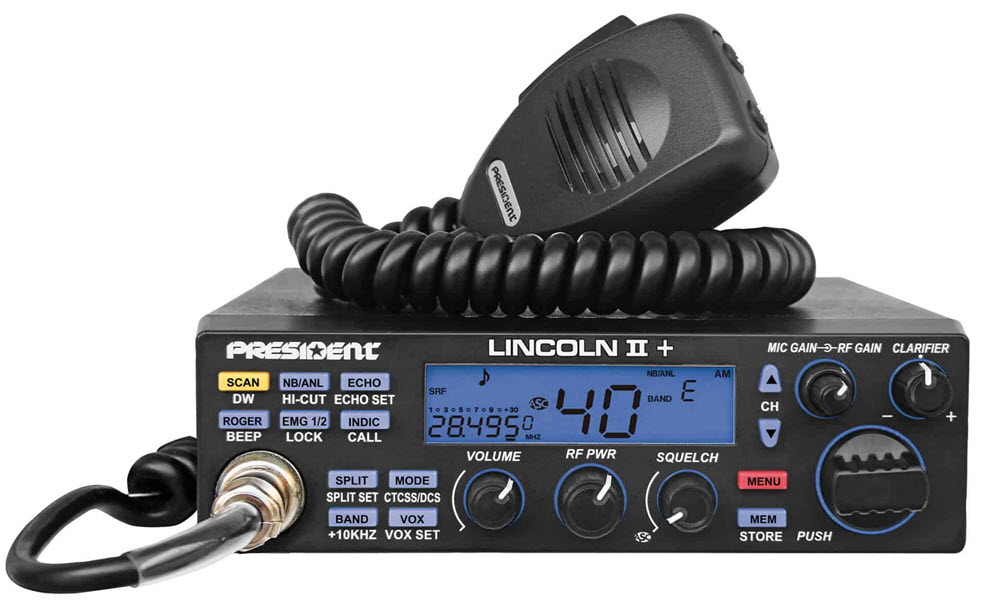
Amateur radio operators can use a variety of transmission modes for their communication, and the two most commonly utilized ones for voice transmission are frequency modulation (FM) and single sideband (SSB).
- FM offers high quality audio signals
- SSB is a better choice for long-distance communication when bandwidth is restricted.
What is CW?
Radio-telegraphy using Morse code is known as CW, which is an acronym for continuous wave.
In the earliest days of radio, radio was used as a wireless extension of the landline (wired) telegraph system.
Today, computer-based digital modes have largely replaced CW, but there are quite a few amateurs that keep the skill alive, especially on the shortwave bands. CW is also used for certain Earth-Moon-Earth communication due to being suitable from a signal-to-noise perspective.
CW-only transmitters are comparatively easy to construct, and a person with normal hearing will be able to recognize weak CW signals in a noise that would drown out normal voice radio.
In the past, proficiency in Morse code was a requirement to be granted an amateur license to transmit on frequencies below 30 MHz. In 2003, the international regulations were altered, and countries were permitted to remove this requirement at their own discretion. In the United States, the Morse code requirement was removed by the Federal Communications Commission on 23 February, 2007.
Non-planet reflectors of radio waves
A hand-held transceiver (HT) can be used to access amateur radio satellites. When conditions are right, it can even be possible to use an ordinary off-the-shelf “rubber duck” antenna.
Amateur operators also use the moon, aurora borealis, and the ionized trails of meteors to reflect radio waves.
Amateur television
The advent of fairly inexpensive consumer video equipment caused a boost for fast scan amateur television. Since wide bandwidth and stable signals are a requirement, amateur television typically makes use of the 70 cm (420–450 MHz) wavelength range, and a signal range exceeding 30-100 km is rare.
High frequency trading

High-frequency trading (HFT) is a type of automated trading. It uses pre-set indicators, signals and trends to enter and exit the market at very high speeds to be able to make minuscule gains on each trade. Each trade makes produces very small gains but a High-frequency trading algorithm can make hundreds of thousands or even millions of trades each day. All those minuscule gains add up to produce large profits. High-frequency trading is all about being able to enter and exit the market as quickly as possible and High-frequency trader spends large sums of money to be able to connect to the market as quickly as possible. Learn more about High-frequency trading and how it works.
High-frequency trading is not suitable for retail traders since retail traders always will be at a disadvantage due to slow internet speed. Almost all profits in High-frequency trading go to whoever has the best connection to the market they trade on. There are other types of algorithmic and automated trading that is more suitable for retail investors. Visit daytrading.com if you want to learn more.